


|
To receive daily emails from Breaking Christian News to your inbox CLICK HERE
The Electoral College and the Popular VoteIf the Electoral College were bypassed in favor of the popular vote, it would only become easier for foreign adversaries to intervene more directly in our elections...
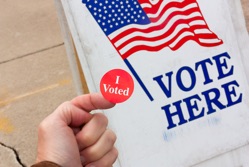
There are two parallel rationales for progressives' national popular vote scheme. Politically, they believe their preferred candidates have a greater advantage in the popular vote than in a state-by-state Electoral College, given the urban and coastal concentration of progressive voters. Indeed, Democratic presidential candidates have won more total votes than Republicans in seven of the last nine presidential elections (except for 2004 and 2024). If popular votes decided the presidency, Democrats would have carried the White House in both 2000 and 2016. Ironically, in the 2024 election, a national popular vote compact would have given Virginia's electoral votes to Donald Trump (R), who won 49.8% of the vote to Kamala Harris's (D) 47.3%. The second rationale is philosophical. Progressives deeply believe in the justice and beneficence of democratic majorities (50% of voters plus one). They therefore oppose any mechanisms that temper or filter the will of the majority, which they believe thwart the common good in favor of the entrenched (read: oppressive) powers. Thus, progressives are always pressing for electoral changes that level out the voting system towards a more direct democracy, such as voter referendums and the direct election of senators. (Of course, progressives also suffer from the conceit of their ideology's historic inevitability; when the majority of voters do not agree with them, they freely declare that the majority is wrong.) The Framers of the US Constitution were much less sanguine about the virtues of majorities. "A pure democracy ... can admit of no cure for the mischiefs of faction. A common passion or interest will, in almost every case, be felt by a majority of the whole ... and there is nothing to check the inducements to sacrifice the weaker party or an obnoxious individual," warned James Madison in Federalist No. 10. "Hence it is that such democracies have ever been spectacles of turbulence and contention; have ever been found incompatible with personal security or the rights of property; and have in general been as short in their lives as they have been violent in their deaths." Thus, the US Constitution takes great care to insulate the government from these democratic vices as much as possible, while still creating a government that is elected by, and accountable to, the people. In choosing the president, the Constitution provides, "Each State shall appoint, in such Manner as the Legislature thereof may direct, a Number of Electors, equal to the whole Number of Senators and Representatives to which the State may be entitled in the Congress." Until 1824, these electors were usually chosen by state legislators, not by a popular vote. The electors were then to "meet in their respective States, and vote by Ballot for two Persons" on the same day, and then their votes would be sealed and sent to the President of the Senate. The person with the most votes would become president, and the person with the second-most votes would become vice president. However, this original system did not survive for long. In the election of 1800, Thomas Jefferson organized the first proto-political party, with Aaron Burr as the vice presidential candidate on a combined ticket. They secured a majority of electoral votes, but, because they each received the same number of votes, they technically tied, which threw the decision to the House of Representatives. On December 9, 1803, Congress passed the 12th Amendment, which was ratified by the states on June 15, 1804. It modified the Electoral College by having electors cast one ballot for president and another for vice president. This amendment solved the problem discovered in the election of 1800 and accommodated the reality that American politics would henceforth always be dominated by two opposing political parties. In Federalist No. 68, Alexander Hamilton set forth five advantages of the Electoral College.
Second, "It was equally desirable, that the immediate election should be made by men most capable of analyzing the qualities adapted to the station, and acting under circumstances favorable to deliberation, and to a judicious combination of all the reasons and inducements which were proper to govern their choice," Hamilton wrote. "A small number of persons, selected by their fellow-citizens from the general mass, will be most likely to possess the information and discernment requisite to such complicated investigations." This is a reason why the Electoral College exists as an intermediate step between a popular election and the choice of a president. Unfortunately, the formulation of political parties largely nullifies the prudent reasoning expressed here. No longer do voters choose trustworthy representatives who use their wisdom to choose among a slate of candidates. Instead, voters choose a slate of electors associated with a political party and therefore bound to that party's candidate. The Electoral College no longer consists of a deliberative process of "analyzing the qualities adapted to the station." Third, "It was also peculiarly desirable to afford as little opportunity as possible to tumult and disorder," Hamilton continued. "The choice of SEVERAL, to form an intermediate body of electors, will be much less apt to convulse the community with any extraordinary or violent movements, than the choice of ONE who was himself to be the final object of the public wishes." The basic point here is that decentralizing elections enables them to run more smoothly. In one sense, this reason for the Electoral College has also been overshadowed by the growth of political parties. Even though elections are conducted by individual states and in individual precincts, political fervor over the candidates sweeps through the entire nation for weeks and months beforehand. Feelings run high, rhetorical (if not physical) attacks occur, and many partisans feel a temptation to win by any means necessary. In another sense, then, the potential disorders of which Hamilton warned would only be exacerbated by a total nullification of the Electoral College. Under current conditions, there are usually six to eight "battleground states" where the outcome is in doubt and therefore closely watched. Even still, the election of 2020 illustrated what sort of shenanigans can occur. If all that counted was running up the score, who could say how many attempts at ballot-stuffing, vote-buying, or other electoral irregularities would occur—and in too many localities for all to be closely watched? Fourth, "Nothing was more to be desired than that every practicable obstacle should be opposed to cabal, intrigue, and corruption," Hamilton added, "chiefly from the desire in foreign powers to gain an improper ascendant in our councils. How could they better gratify this, than by raising a creature of their own to the chief magistracy of the Union?" There are already bipartisan concerns about foreign intervention in US elections, even from something as comparatively inane as social media advertising. If the Electoral College were bypassed in favor of the popular vote, it would only become easier for foreign adversaries to intervene more directly in our elections. For instance, a government like China's could direct American university students from China to cast ballots in jurisdictions with weak election security laws. And the abuse would not be immediately obvious because the extra ballots were cast in a district that was already lopsided. Fifth, Hamilton concludes, "Another and no less important desideratum was, that the Executive should be independent for his continuance in office on all but the people themselves. He might otherwise be tempted to sacrifice his duty to his complaisance for those whose favor was necessary to the duration of his official consequence." This relates to the first reason: the president should be elected by the people alone, that he should be dependent on the people alone. In contrast to the contemporary Left, Hamilton defended the Electoral College as a vehicle for securing the choice of president by and for the people, instead of a hindrance to these objects. As noted above, not all the advantages of the Electoral College have always applied in the same degree. In particular, the development of America's two-party political system has weakened the deliberative role the Electoral College was originally intended to play. However, the Electoral College remains an important filtration mechanism to protect against the abuses of the sheer majority will by requiring parties and candidates to consider the interests of many different regions and states. The current way in which the Electoral College works is less open to electoral abuse or foreign intervention than a system that elects the president based solely on the popular vote. And, as Hamilton noted more than once, far from hampering the choice of the people, the Electoral College is an effective way of both respecting and protecting the people's choice. Perhaps this was why Hamilton could write that "The mode of appointment of the Chief Magistrate of the United States is almost the only part of the system, of any consequence, which has escaped without severe censure, or which has received the slightest mark of approbation from its opponents." How times have changed! Subscribe for free to Breaking Christian News here Joshua Arnold is a senior writer at The Washington Stand. 
To receive daily emails from Breaking Christian News to your inbox CLICK HERE
Other Recent Articles from Breaking Christian News Researcher Convinced He's Found Noah's Ark Delivers a Message for Critics Roseanne Barr Is Coming Back With a New Family Series Security Bite: Apple's Latest Update, iOS 27, Lets Apps Ask Your iPhone If You're Being Scammed When Death is Dressed as a Cure Democrat Socialist Policies Would Cost $350K Per Household, Shorten Life Expectancy, Report Finds Texas County Takes Stand Against Sharia With Unanimous Vote New California Law Forces Churches to Provide 'Hate Speech' Training Massive 2,000-Year-Old Discovery Brings the World of Jesus to Life Remembering October 7th: Thousands of Christians Gather in Jerusalem to Fight 'Spiritual Battle' Pro-Lifers Visit Millions of Homes in Battleground States Ahead of Midterms If This Is True, CNN Just Dropped Some Huge Nicolás Maduro News A Satanic Invocation Opens Iowa City Council Meeting FBI Arrests 18-Year-Old Accused of Plotting ISIS Mall of America Attack in Minnesota 1,000 Christian Leaders Gather in Israel to Honor Oct 7 Victims, Stand With Survivors Christian Believers, Pastors, America Needs Your Biblical Voice Dr. Malone's Deep Dive into the Russian 'Plague' and What We Should Know |
Subscribe to
|

 [
[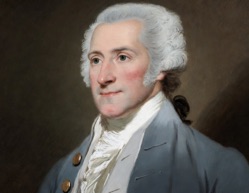 First, "It was desirable that the sense of the people should operate in the choice of the person to whom so important a trust was to be confided," he wrote. "This end will be answered by committing the right of making it, not to any preestablished body, but to men chosen by the people for the special purpose." In other words, the president should be chosen by the people. Interestingly, this advantage is now realized more fully than in the first three decades, when the choosing of electors by state legislators largely thwarted it. (Image: Created by Grok AI)








All articles on this site and emails from BCN are copyrighted property of Breaking Christian News. Permission is given to link to, or share a BCN story if proper attribution is given to both the original writer and summarizer of the story. Breaking Christian News 2005-2019. All Rights Reserved.
Breaking Christian News is a division of Elijah List Publications, Inc. All Rights Reserved
Disclaimer: Articles and links, as well as the source articles linked to; do not necessarily reflect the opinion of Breaking Christian News.
| Home | Store | Subscribe | Facebook | Article Archive |