
8-1 Supreme Court Decision Upends Student ID Fight in Battleground Days Before Key Senate Election
Fred Lucas : Oct 23, 2026
Daily Signal
"This Court has repeatedly emphasized that lower federal courts should ordinarily not alter the election rules on the eve of an election. Here, the District Court did not point to anything that would justify deviating from that principle." -SCOTUS Ruling
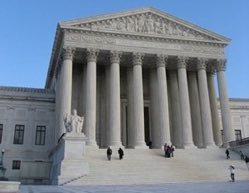 [DailySignal.com] The Supreme Court in an 8-1 decision allowed New Hampshire to block student IDs as a valid form of voter identification. (Image: Pixabay)
In an unsigned order released Thursday, the justices paused Oct. 2 and Oct. 5 orders by US District Judge Joseph Laplante, a George W. Bush appointee, that prevented the state from enforcing its restrictions on student IDs.
Justices cited past precedent, noting, "This Court has repeatedly emphasized that lower federal courts should ordinarily not alter the election rules on the eve of an election."
They added, "Here, the District Court did not point to anything that would justify deviating from that principle."
In April, the state Legislature passed a bill, HB 323, to prevent student IDs from being used as valid identification to obtain a ballot. Lawmakers noted that student IDs often lack expiration dates and can remain in circulation after they are no longer valid, and generally lack the address verification, citizenship confirmation, and security features associated with government-issued identification.
The law went into effect in June. The Coalition for Open Democracy sued, alleging the law put an undue burden on the right to vote and discriminated against young voters.
Laplante's order declined to block HB 323's provision on student ID cards, SCOTUSblog reported. However, his ruling prevented the enforcement of Secretary of State David Scanlan's April directive to local election officials extending that restriction to the law's "safety-valve provision that permits a voter without qualifying photo identification to establish identity by other means."
In his brief to the Supreme Court, Scanlan said election training on the new procedures had been underway for months.
"Over the next five months, local election officials were trained on the new identify-verification rules consistent with that guidance," Scanlan's petition said. "During that same timeframe, the secretary's office published student voting guides, updated polling place posters, updated its website, conducted social media outreach, produced and ran radio ads, and spoke at public events to explain how identity verification would work."
New Hampshire is among a few states that could decide which party controls the US Senate, as Democratic Rep. Chris Pappas takes on former Republican Sen. John Sununu, the son of a former governor and brother of another former governor.
Justice Ketanji Brown Jackson was the lone dissenter Thursday, writing, "Consequently, here, the District Court's injunction was reasonably designed to address alleged misinformation, not to change the law."
The US Court of Appeals for the 1st Circuit had declined to pause Laplante's ruling, so Scanlan appealed to the high court for the emergency ruling with days to go before the midterm election. Subscribe for free to Breaking Christian News here
Fred Lucas is senior investigative reporter for the Daily Signal. He is the author of "The Myth of Voter Suppression: The Left's Assault on Clean Elections."