
What the Nation's Education Report Card Teaches Us About Repairing the Human Soul
Jonathan Butcher : Jul 27, 2026
Daily Signal
The so-called "equity grading" policies of cities such as Chicago and school districts in Minnesota do not give failing grades to students, regardless of performance, and have a stated focus on identity politics...
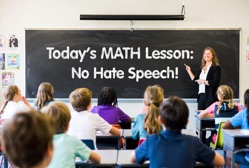 [DailySignal.com] Stories bemoaning US student test scores have become a bromide. But some reports on student achievement offer a glimpse into the reasons why achievement is so poor. So it is with the latest Long Term Trend report from the Nation's Report Card, the National Assessment of Education Progress. (Image: Created by Grok X AI)
First, the results: Reading and math scores among 9-year-olds improved slightly over scores from 2022, but reading achievement is unchanged from 2012, and math is down compared to scores from that year. Scores for 13-year-olds are similar. Americans have completed what can only be considered a lost decade of student learning for most children.
Yet the LTT's student survey is revealing, helping to explain how students arrived at this low point. For example, the share of 9- and 13-year-olds who read for fun "never or hardly ever" is at its highest point since researchers began tracking the results. The percentage of students who read daily is at its lowest point. The share of students who reported that "no homework was assigned" to them during the school year was 39%, also the highest figure on record. Just 3% of students reported doing more than two hours of homework each night, exactly half the figure from 2004.
These survey results smack of low expectations. The so-called "equity grading" policies of cities such as Chicago and school districts in Minnesota do not give failing grades to students, regardless of performance, and have a stated focus on identity politics. College professors report that students simply do not have the patience, diligence, or perhaps even ability to finish reading books, a sign they were not asked to read in high school. More than 1,400 University of California faculty signed an open letter in June decrying the dismal state of math skills among students.
These are all symptoms of a school system that allows students to just "get by"—call it the "excused generation."
In "What Really Matters: Restoring a Legacy of Faith, Freedom, and Family," Timothy S. Goeglein explains that these pitiful outcomes have lasting impacts on children and society. "Sadly, when children do not thrive, the effect can be generational, as broken families beget more broken families and poverty results in more poverty; and the societal problems are beyond more than any amount of money or any public institution can fix."
Goeglein, a vice president for Focus on the Family and former assistant to President George W. Bush, argues that the test scores are concerning but the culture that emerges from such mediocrity is a more pressing problem. "I would suggest we start investing more in values, as no amount of money can repair the human soul. But investing in values is what will enable not only our children to obtain the human capital they need to succeed, but our society to do so as well," he writes.
"What Really Matters" ignores technocratic debates over school class sizes and taxpayer spending on education and argues that good policy reforms are built on faith, virtue, and family.
He reminds readers that perhaps the most consequential research on education from the last century did not advance reading techniques or algebra equations but studied the issue of family formation. Goeglein cites James Coleman's "Equality of Educational Opportunity," now 60 years old, which found that parents' marital status and other background characteristics have a greater effect on a child's success than the school they attend. Families matter, fathers matter (as sociologists can attest, given the pervasive absence of so many), marriage matters, faith matters.
"Ultimately, restoring our nation's education system starts at home," Goeglein says. He continues: "Upward mobility and equal opportunity for all will occur only through strong families and a quality education that prepares our nation's children to become the productive citizens of tomorrow."
The LTT exposes educators' low expectations of students, but Goeglein argues we—all Americans—should have higher expectations for ourselves, including parents, policymakers, and teachers.
Hold our human souls to a higher standard, and the next generation can begin the cultural repair, learning by example. Subscribe for free to Breaking Christian News here
Jonathan Butcher is the Will Skillman fellow in education at The Heritage Foundation...