
Worldwide Implications of the UAE's OPEC Exit
Joshua Arnold-Commentary : May 1, 2026
The Washington Stand
While the UAE's departure from OPEC is a positive development in that it likely increases American influence, American policy makers should also remember to handle the relationship with care. For all of its friendship toward the US and Israel and opposition to political Islam, the UAE is no model Western nation...
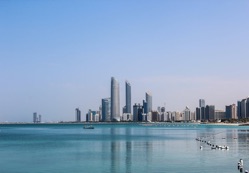 [WashingtonStand.com] The Trump administration continues to reshape the Middle East, as the United Arab Emirates (UAE) announced Tuesday that, after 59 years, it would leave the Organization of the Petroleum Exporting Countries (OPEC), effective May 1. The Wall Street Journal editors assessed the move as "another foreign policy victory for American fossil-fuel energy," while Fox Business called it "good news for the world in the long run." The UAE's decision will certainly have global ramifications, both economic and political; for the US, it likely entails a deepening relationship fraught with hazards. (Image: Pexels)
OPEC is an international consortium of oil-exporting nations that sets maximum production quotas for its members in an attempt to limit international supply and thereby keep world oil prices (and therefore oil profits) high. It is, effectively, a cartel of governments instead of businesses—a group of nations that cooperate more or less as an oil-producing monopoly.
OPEC currently boasts five founding members (Iran, Iraq, Kuwait, Saudi Arabia, and Venezuela) and seven full members (Algeria, Congo, Equatorial Guinea, Gabon, Libya, Nigeria, and the UAE). Ecuador and Indonesia have left the organization multiple times. Qatar withdrew its membership in 2019, and Angola withdrew its membership in 2024.
In 2016, OPEC signed an agreement with 10 other oil-producing nations (Azerbaijan, Bahrain, Brunei, Kazakhstan, Malaysia, Mexico, Oman, Russia, South Sudan, and Sudan) to create what is essentially a larger production cartel known as OPEC+. Together, OPEC and OPEC+ control 59% of the world's oil supply.
The UAE has long been one of OPEC's top oil producers, ranking somewhere in the range of second- to fourth-largest producer, depending on various factors. Before Iran shut down Gulf oil traffic on February 28, the UAE was producing some 3.6 million barrels of oil per day, or approximately 3% of the global supply.
Alongside Saudi Arabia, OPEC's top producer, the UAE also has the most flexibility to increase or slow production, enabling OPEC to manipulate global markets in classic cartel behavior. Thus, the UAE's decision to exit OPEC deals a significant blow to the organization's ability to control world oil prices.
Economic Implications
More importantly, the UAE's decision to leave OPEC will likely lead to a worldwide decline in oil prices, at least in the medium- to long-term. "Having invested heavily in expanding energy production capacity in recent years, the bigger picture is that the UAE has been itching to pump more oil," reports Capital Economics. Freed from the quotas set by OPEC, the UAE may expand production from 3.6 million barrels per day to at least 5 million barrels per day by 2027, a 40% increase for the country and more than 1% increase for all global oil production.
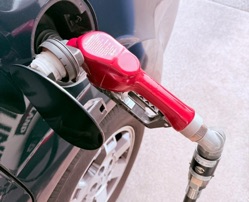 According to the unchanging principles of supply and demand, an increase in the supply of oil will lead to a corresponding decrease in the price, until the market reaches a new equilibrium. This is also what we would expect when a major producer stops cooperating with a cartel; the result is increased competition in the market, leading to more production and lower prices. (Image: Pexels)
There are two major caveats. First, the two preceding paragraphs assumed that all other factors would remain unchanged when the UAE expands its oil production. Of course, the real world is more dynamic, and other oil producers would likely respond to such a dramatic increase in Emirati supply. Of most relevance, the remaining OPEC nations could agree to cut production further to offset (or partially offset) the UAE's increased production, in order to maintain roughly the same price for oil.
The incentive for OPEC countries to do so is that some have inefficient oil industries that can only turn a significant profit at higher prices. The disincentive for OPEC countries to do so is that they would cede further market share and produce less oil on which to make a profit. The largest burden for production cuts would likely fall on Saudi Arabia, which would likely look unfavorably on ceding market share to it peninsular rival. Thus, the discomfort of OPEC nations would likely work out to the benefit of the rest of the world, which would then be able to obtain energy at lower prices.
The second caveat concerns the Iran war. Iran's illegal closure of the Strait of Hormuz cut off approximately 20% of world oil production from global markets, causing a sharp increase in world oil prices. The UAE is able to transport some oil over land to a pipeline terminus on the Gulf of Oman, but its ability to increase capacity is largely nullified while the Strait of Hormuz remains more-or-less closed. Thus, any benefit to world oil prices from an increase in UAE production would only take effect sometime after the conclusion of the Iran war.
Geopolitical Implications
The UAE's departure from OPEC also has geopolitical implications, as it moves one of the most prosperous Gulf oil states away from a largely anti-American alliance towards a much more America-friendly posture... Subscribe for free to Breaking Christian News here
Continue reading Here.