America's Elections Are at Stake. Texas Shows They Can Be Fixed
Douglas Blair : Aug 23, 2022
The Daily Signal
"...The best thing you can do, folks, is sign up to be a poll worker. There's a critical need for poll workers. And if you want to believe in the integrity of elections, sit there on Election Day and check IDs, check people in, hand them their ballot. That would be a huge help. There's a constant need for those. If you can't do that, sometimes that's a bigger time commitment, sign up to be a poll watcher..." -Chad Ennis, director of the Forensic Audit Division with the Texas Secretary of State's office
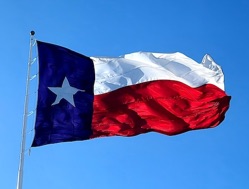 [DailySignal.com] As we approach the next election cycle, many Americans wonder whether or not their votes will count. (Image: Unsplash-Pete Alexopoulos)
But given the incredibly high stakes in any election, how can Americans know that their votes actually matter and that their elections are free and fair?
Chad Ennis, director of the Forensic Audit Division with the Texas Secretary of State's office and former senior fellow for the Election Protection Project at the Texas Public Policy Foundation, was instrumental in getting his state to take steps toward securing the election process.
"I really feel like Texas has been a leader in all kinds of voting," he says. "We were one of the first states to have early voting, but we've always been very keen on keeping the security in place."
Ennis joins the show to discuss the steps Texas took to secure its elections and offer some guidance on what other states should do to secure theirs.
Listen to the podcast HERE or read the lightly edited transcript that follows:
Doug Blair: My guest today is Chad Ennis, director of the Forensic Audit Division with the Texas Secretary of State's office and former senior fellow for the Election Protection Project at the Texas Public Policy Foundation. Chad, welcome to the show.
Chad Ennis: Yeah, great to be here.
Blair: Excellent. Well, we're very happy to have you here to talk about an issue that is on most Americans' minds right now, which is election integrity.
So Texas ranks pretty consistently high on Heritage's Election Integrity Scorecard for having these really effective and safe ways to vote. It means that one vote means one vote.
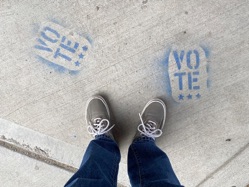 Blair: How did some of those things get into place? And what do you see is essential to maintaining that status of having strong election integrity measures? (Image: Unsplash-Phil Scroggs)
Ennis: Our Legislature has been really proactive over the years. I really feel like Texas has been a leader in all kinds of voting. We were one of the first states to have early voting, but we've always been very keen on keeping the security in place.
And whether it be photo ID when you vote—here in the last legislative session, we moved to some type, a weaker form, but at least a form of ID for mail-in ballots, because that's where things get hairy.
So we've tried to be a leader in that and I think Texas has done a pretty good job.
Blair: Some of those policies, like you mentioned, mail-in voting, have come under scrutiny in recent years. So is it that those policies themselves are problematic or is it they're not implemented correctly?
Ennis: Mail-in ballot's an interesting thing. In this day and age, I think it's necessary because we have so many people that are homebound and just can't get to the polls.
So it's something we need to do, but you want to make it as similar to the in-person voting experience as you can. And that's where Texas has tried to lead in requiring your driver's license number, the last four of your Social Security number on your application to at least provide some level of that in-person voting experience to the folks.
So I don't think mail-in voting is inherently bad. It just needs to be done well.
Blair: Sure. Now, the other thing that we just discussed is voter ID, which is just as contentious as mail-in voting is. So Texas is a state that has quite a few disparate communities. It has a large Latino population as well. And the left will claim often that these types of policies are discriminatory. Have you found in Texas that has affected the ability of some of these groups to access ballots?
Ennis: We have not seen any of that. Turnout continues to rise among all demographics. It's just a myth.
Frankly, everyone has an ID. And if not, if you need one, we can get you one. If there's a reason you can't get one, we've got a form for that.
We want to know who you are. I think the public wants to know that the person on the voter roll is the person who's voting. And the only way we can do that is with an ID... Subscribe for free to Breaking Christian News here
Continue reading or listen to the podcast here.